~RECENTLY COMPLETED IN 2012~

Western Mediterranean Kosher Cruise
aboard the Norwegian Cruise Lines: Epic
The Brand New Epic is Stunning!

June 24 - July 1, 2012 (7 Nights - Kosher Cruise)


  SCHOLAR IN RESIDENCE:
  Rabbi Aharon Ziegler
  (see below)


Itinerary


DAY

PORT

ARRIVE

DEPART

Sun., Jun. 24 Barcelona, Spain Departs 6:00 pm
Mon., Jun. 25 At Sea
Tues., Jun. 26 Naples, Italy 7:00 am 7:00 pm
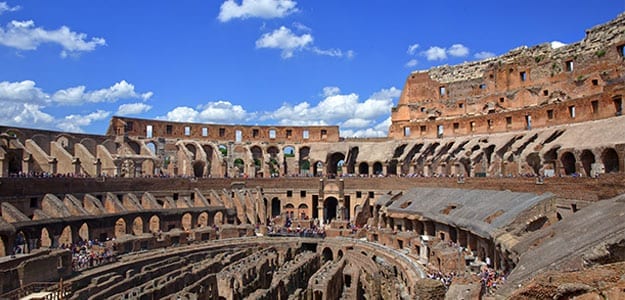
Wed., Jun. 27 Rome (Civitavecchia), Italy 7:00 am 7:00 pm
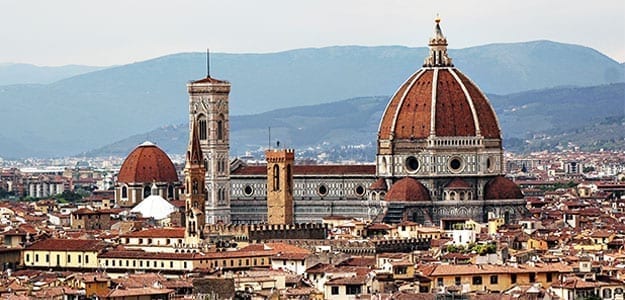
Thurs., Jun. 28 Florence/Pisa (Livorno), Italy 7:00 am 7:00 pm
Fri., Jun. 29 Cannes 8:00 am 7:00 pm
Sat., Jun. 30 Provence (Marseille), France 7:00 am 7:00 pm
Sun., Jul. 1 Barcelona, Spain 5:00 am Arrives
 

Accommodations

Select the Cabin Category you would like, and then scroll to the bottom of this form to select the number of travelers and submit it.

Inside Stateroom

   
Cat. Description Price
Inside Stateroom These Inside Staterooms are a great and affordable accommodation for up to four guests. They feature a separate bathroom with shower, two lower beds that convert into a queen-size bed and pull down beds to accommodate two more. (128 sq. ft.)
IE Inside Stateroom $2,510
Wait List

ID Inside Stateroom $2,530
Wait List

IC Inside Stateroom $2,550

IB Inside Stateroom $2,570

IA Inside Stateroom $2,590

I1 Inside Stateroom $2,875


Studio Stateroom

   
Cat. Description Price
Studio Stateroom Cool and hip, right down to the funky lighting and flat screen TV, this completely new exclusive key card access-only category is unlike anything you have ever experienced before. These staterooms have two lower beds with a maximum capacity of two and a window view to the corridor. Studio guests have private key card access to The Living Room, which is a shared private lounge that boasts a bar, two large TV screens and comfy seating for hanging out, reading a book or just enjoying a drink before dinner. Approx Square Footage*: 100
T1 Studio Stateroom $2,900


Balcony Stateroom

   
Cat. Description Price
Balcony Stateroom These Balcony Staterooms have room for up to four guests and feature floor-to-ceiling glass doors that open to a private balcony with an incredible view. They include a separate bathroom with shower, two lower beds that convert into a queen-size bed, a sitting area and additional bedding to accommodate one more. (216 sq. ft.)
BC Balcony Stateroom $3,270
Wait List

BB Balcony Stateroom $3,290
Wait List

BA Balcony Stateroom $3,310
Wait List

B6 Balcony Stateroom $3,330
Wait List

B4 Balcony Stateroom $3,370
Wait List

B1 Balcony Stateroom $3,430
Wait List

B9 Spa Balcony Stateroom:
When you book this stateroom, you will receive entry to the Mandara Spa experience, including complimentary access to the Thermal Spa Suites.
$3,465
Wait List


Mini-Suite

   
Cat. Description Price
Mini-Suite The Mini-Suites with a Balcony have room for up to four and feature curved walls, a sitting area, two lower beds that convert to a queen-size bed and a luxury bath with shower or tub. The also include additional bedding to accommodate two more guests and a private balcony with an amazing view. (245 sq. ft. including balcony)
MD Mini Suite $3,735
Wait List

MC Mini Suite $3,795

MB Mini Suite $3,815
Wait List

MA Mini Suite $3,835
Wait List

M3 Mini Suite $3,855
Wait List

M2 Mini Suite $4,335
Wait List

M9 Spa Mini Suite:
When you book this stateroom, you will receive entry to the Mandara Spa experience, including complimentary access to the Thermal Spa Suites.
$4,355


Suite

   
Cat. Description Price
Suite
S6 The Haven Aft-Facing Penthouse with Balcony
These Penthouses with a Balcony have so much to offer. With room for up to two, you'll have a separate bedroom with queen-size circular bed and a living area, plus these Aft-Facing Penthouses offer an unforgettable view from the private balcony and include exclusive access to the Courtyard area, Concierge Lounge and private restaurant and bar. Includes butler and concierge service.

Approx Square Footage*: 322 (including balcony)
$5,145
Wait List

S9 The Haven Spa Suite with Balcony

The Spa Suites, built for two, are a great way to experience a total spa vacation. These suites feature a queen-size circular bed, in suite hot tub, spa décor and entry to the Mandara Spa experience, including complimentary access to the thermal suites. In addition to the private balcony with incredible views and luxury bathroom, you'll also have exclusive access to the Courtyard area, Concierge Lounge and private restaurant and bar. Includes butler and concierge service. Guests under 18 are not allowed in the thermal suites.

Approx Square Footage*: 322 (including balcony)
$5,210
Wait List

S5 The Haven Courtyard Penthouse with Balcony

With a maximum capacity of two, these Penthouses include a queen-size bed and luxury bath with separate shower. In addition to the private balcony with a fantastic view, you'll also have exclusive access to the Courtyard area, Concierge Lounge and private restaurant and bar. Includes butler and concierge service.

Approx Square Footage*: 322 (including balcony)
$6,455
Wait List

S4 The Haven 2-Bedroom Family Villa with Balcony

With a living room, dining area, separate bedroom with queen-size bed and private balcony, these Villas have a maximum capacity of six and are perfect for the whole family. They feature two bathrooms, additional bedding to accommodate four more guests and exclusive access to the Courtyard area, Concierge Lounge and private restaurant and bar. Includes butler and concierge service.

Approx Square Footage*: 506 (including balcony)
$7,515
Wait List

S2 The Haven Deluxe Owner's Suite with Large Balcony

These suites with room for up to four, boast all around floor-to-ceiling windows. They include a separate bedroom with king-size bed, a living room, separate dining area and a private balcony with an amazing view. You'll also have a luxurious bathroom with separate shower and whirlpool tub, additional bedding to accommodate two more guests and access to the Courtyard area, Concierge Lounge and private restaurant and bar. Includes butler and concierge service.

Approx Square Footage*: 852 (including balcony)
$8,830
Wait List


* Room measurements are approximated, and some rooms in the same category may vary in size and/or have different furniture placement, windows or fixtures from those pictured.

• Rates are subject to change without notice.
• All rates are per person based on double occupancy.
• Gratuities not included – unless indicated.
• $1000 per person deposit due at time of booking.
• Payment in full is due 90 days before sailing.
• Single rate is 170% in all categories.
• 3rd/4th person rate (all Categories) is $1960 (adult or child).
• Travel insurance is strongly recommended.
• These rates do not include port charges and taxes of $285.30
• This rate does not include prepaid gratuities:
     $84.00 per person.

Regular cabins:
Bookings are refundable less $100 administration fee until 90 days before sailing when full payment is due.
Less than 90 days: 100% of total - no refund.

Suites and Higher Categories (not including Mini-Suites):
Bookings are refundable less $100 administration fee until 125 days before sailing when full payment is due.
From 124 days to 90 days: Bookings are refundable less 25% of total invoice amount.
Less than 90 days: 100% of total - no refund.

We strongly recommend purchasing travel insurance.

Number of travelers in your room:


JEWISH BARCELONA

General History

Barcelona is the capital and most populous province of Catalonia, as well as the second largest city in Spain. In 2006, its estimated population was 1,605,602. It is located on the Mediterranean coast between the mouths of the rivers Llobregat and Besòs.

According to archeological evidence there existed a sizeable Jewish community in the province of Catalonia, where Barcelona is located, from as early as the beginning of the Common Era. For centuries thereafter, the Jews of Barcelona managed their own local affairs and lived relatively well while confined to the Juderia (Jewish quarter).

In 1263, King James I of Aragon convened a religious disputation in Barcelona with the aim of convincing the Jews to convert to Christianity. Nachmanides, the great Jewish sage and bible scholar, was called upon to represent the Jews of Spain. The disputation lasted four days, during which time Nachmanides argued passionately for the validity of Judaism, and the Jewish community of Barcelona waited nervously for the King's reaction. At the end of the disputation King James I awarded Nachmanides a large some of money for his eloquence and famously stated that he had never heard someone argue so well for such an unjust cause. Yet, despite the King's kind words, Nachmanides was later forced to leave Spain and eventually went on to settle in the Land of Israel.

By the fourteenth century the situation of the Jews of Barcelona and all of Spain had worsened significantly. Numerous anti-Semitic decrees were enacted by the monarchy and Catholic Church, and many Jews converted to Christianity while secretly adhering to Judaism to escape persecution. On Ash Wednesday 1391, a series of Church-led riots broke out across the country. The riots reached Barcelona in early August, during which time thousands of Jews were murdered or forcibly converted. While the Jewish expulsion from Spain did not occur until the reign of King Ferdinand and Queen Isabella in 1492, all the Jews of Barcelona either fled or converted years earlier following the riots of 1391.

Barcelona remained devoid of any Jewish presence for more than five hundred years until several Ashkenazi and Sephardic Jews came from North Africa and Eastern Europe at the beginning of the twentieth century. Today, an estimated 3,500 Jews reside in Barcelona, making it the largest concentration of Jews in Spain. In addition to its two functioning synagogues (one Ashkenazi and the other Sephardic), the Barcelona Jewish community also has a Jewish day school, old age home, Chabad house, and an annual Jewish film festival.

Visiting Today

What remains in Barcelona today is but a remnant of the rich Jewish culture that existed during the Golden Age of Spain. One of the main attractions that is still in existence is the ancient Call (Juderia, or ghetto) and the Sinagoga Mayor of Barcelona. Originally built during the fifth century, a new synagogue was later built on top of it in the fourteenth century and additional floors were added to the building in subsequent centuries. Despite perhaps being the oldest synagogue in Europe, the Sinagoga Mayor was forgotten and abandoned until the twentieth century until which point it was used for many purposes including a storage house and dry cleaner.

Lying just outside Barcelona proper are two other ancient Jewish sites. The first is the ancient Jewish cemetery of Montjuic (lit. Jewish mountain) located on the western edge of the city. The ancient cemetery houses the last remains of some of the most notable members of the pre-expulsion Spanish community and is officially a city park. The second site of interest is the old city of Gerona, which is located approximately 60 miles northeast of Barcelona. While there are few, if any, Jews currently residing in Gerona, this small city was once the home of the great Jewish sage Nachmanides who defended the Jews of Spain in the thirteenth century at the Disputation of Barcelona.

What to See
One of the most attractive streets in the city is La Rambla. Here you can see street vendors alongside living statues and mimes. You can pick up trinkets and jewelry here, if you are ready to haggle.

This is also the street for street performers. Is also home to the city's opera house and bird market. The former is a 19th century structure, while the latter is an 18th century one. Both are worth visiting. At the end of La Rambla stand the Monument of Columbus and the city's harbor.

A visit to the Gothic Quarter is a must. This is the old part of the city and is famous for being the home of Picasso from 1895 to 1904. Even Joan Miro was born here and called it his home. In this area, you will be able to admire Gothic architecture from the 14th and 15th centuries. The old medieval buildings and cobblestone streets lend a unique air to the area.

When you are in the city, you should visit Tibidabo. This is the highest hill in the region and offers a spectacular view of the city. It is also home to a family fun park and a cathedral. You can take a glass lift to go up 115 meters to the observation platform in the telecommunication tower here. The view from the platform is mind-blowing.

Shopping
The best time to shop here is during the yearly sale, which starts from middle of January and lasts till the end of February, and then again from beginning of July through August. However, you can also pick up great souvenirs from La Rambla. Here you can pick up porrons, ceramics and Catalan music CDs. If you want to take home authentic gifts, the best places are the shops around the museums.

Getting There
The city has two airports – Barcelona Girona Airport and Barcelona International Airport. The former is around 103 kilometers from the city, while the latter is just 13 kilometers.

Many airlines, such as US Airways, Air France, Air Canada and British Airways, service the city. If you are looking for budget plane tickets, travel to the city between March and April, October and November and from December to February. Of course, fares are high during Christmas and New Years, so it is best to avoid travel then. When traveling during off-peak season, buy airline tickets a few days before your travel to get the best discounts.
JEWISH ROME
The Classic Period

The Jewish community in Rome is known to be the oldest Jewish community in Europe and also one the oldest continuous Jewish settlements in the world, dating back to 161 B.C.E. when Jason ben Eleazar and Eupolemus ben Johanan came as envoys of Judah Maccabee. Other delegations were sent by the Hasmonean rulers in 150 and 139 B.C.E. After the Romans invaded Judea in 63 B.C.E., Jewish prisoners of war were brought to Rome as slaves, Jewish delegates came to Rome on diplomatic missions and Jewish merchants traveled to Rome seeking business opportunities. Many of those who visited Rome stayed and the Jewish population began to grow.

While the treatment of Jews by the Romans in Palestine was often harsh, relations with the rulers in Rome were generally much better. Julius Caesar, for example, was known to be a friend of the Jews; he allowed them to settle anywhere in the Roman Empire. According to historians, when Caesar was assassinated by Brutus in 44 B.C.E., Roman Jews spent day and night at Caesar's tomb, weeping over his death. His successor, Augustus, also acted favorably toward the Jews and even scheduled his grain distribution so that it would not interfere with the Jewish Sabbath. Two synagogues were founded by slaves who had been freed by Augustus (14 C.E.) and by Agrippa (12 B.C.E.).

Twice in the Classic period, Jews were exiled from Rome, in 19 C.E. and in 49-50 C.E. The first exile took place due to the defrauding of an aristocratic Roman woman Fulvia, who had been attracted to Judaism. The second exile occurred because of disturbances caused by the rise of Christianity. It is not certain, though, that these measures were fully carried out or that the period of exile lasted a long time.

During the Roman-Jewish wars in Palestine in 66-73 and 132-135, Jewish prisoners of war were brought to Rome as slaves. A number of the oldest Jewish Roman families trace their ancestry in the city to this period. Jewish scholars from Israel came to Rome in 95-96. In 212, Caracella granted the Jews the privilege of becoming Roman citizens

From the second half of the first century C.E., the Roman Jewish community became firmly established. A majority of the community were shopkeepers, craftsman and peddlers, but other Jews became poets, physicians and actors. Satiric poets of the time, such as Juvenal and Martial, depicted the raucous activities of the Jewish peddlers and beggars in their poetry. Evidence has been found that twelve synagogues were functioning during this period (although not at the same time). Unfortunately, none of those synagogues have been preserved.


The Christian Empire

The Jewish position in Rome began to deteriorate during the reign of Constantine the Great (306-336), who enacted laws limiting the rights of Jews as citizens. Jewish synagogues were destroyed by Christian mobs in 387-388 and in 493-526 (during the reign of Theodoric). When Rome was captured by Vandals in 455, spoils of the Jerusalem Temple were taken to Africa.Once Christianity became the official religion of the Roman Empire, emperors further limited the civil and political rights of the Jews. Most of the imperial laws dealing with the Jews since the days of Constantine are found in the Latin Codex Theodosianius (438) and in the Latin and Greek code of Justinian (534). Some of the relevant decrees in these codes include prohibitions against making proselytes, intermarriage, owning slaves (slave labor was very common and this prohibition severely restricted the economic life of the Jews), holding any esteemed position in the Roman state, building new synagogues and testifying against Orthodox Christians in court.

During this period there was a revival of Hebrew studies in Rome, centered around the local yeshiva, Metivta de Mata Romi. A number of well-known scholars, Rabbi Kalonymus b. Moses and Rabbi Jacob "Gaon" and Rabbi Nathan b. Jehil (who wrote a great talmudic dictionary, the Arukh), contributed to Jewish learning and development. Roman Jewish traditions followed those practiced in the Land of Israel and the liturgical customs started in Rome spread throughout Italy and the rest of the world.
The Middle Ages
From the 1200's to the mid 1400's, treatment of the Jews varied from pope to pope. For example, in 1295, Pope Bonifice VIII humiliated a visiting Jewish delegation that was sent to congratulate him on his ascendancy; whereas, Pope Boniface IX (1389-1404) treated the Jews benevolently. He favored a succession of Jewish physicians and recognized the rights of Jews as citizens. On the other hand, Eugenius IV (1431-47) passed anti-Jewish legislation in the Council of Constance.

Interestingly, while the Jews were numerically inconsequential in the region during medieval times, their place in the Low Countries' culture was much more prominent. A significant portion of the surviving literature and poetry from that era is rife with anti-Semitic references, and the contemporary Christian legends emphasize the perfidy of the Jews, and their role in the death of Jesus.
The Renaissance
The Jews of Rome fully participated in the flourishing economic and intellectual climate of the Renaissance. They became merchants, traders and bankers, as well as artisans. During the reign of Pope Alexander VI (1492-1503), however, a special tax was imposed on the Jews of Rome to pay for his military operations against the Turks. Later popes during the first half of the 16th Century were more sympathetic to the Jewish community than Alexander VI. The Medici Popes, Leo X (1513-1521) and Clement VII (1523-1534), treated the Jews well. Leo X abolished certain discriminatory levies, did not enforce the wearing of the badges Jews had been forced to put on in the 12th century and also sanctioned the establishment of the Hebrew Printing Press. Leo X, as well as other popes from this period, such as Sixtus IV, retained Jewish physicians in Rome.
The Ghetto
During the Reformation, in 1555, Pope Paul IV decreed that all Jews must be segregated into their own quarters (ghettos), and they were forbidden to leave their home during the night, were banned from all but the most strenuous occupations and had to wear a distinctive badge — a yellow hat. More than 4,700 Jews lived in the seven-acre Roman Jewish ghetto that was built in the Travestere section of the city (which still remains a Jewish neighborhood to this day) If any Jews wanted to rent houses or businesses outside the ghetto boundaries, permission was needed from the Cardinal Vicar. Jews could not own any property outside the ghetto. They were not allowed to study in higher education institutions or become lawyers, pharmacists, painters, politicians, notaries or architects. Jewish doctors were only allowed to treat Jewish patients. Jews were forced to pay an annual stipend to pay the salaries of the Catholic officials who supervised the Ghetto Finance Administration and the Jewish Community Organization; a stipend to pay for Christian missionaries who proselytized to the Jews and a yearly sum to the Cloister of the Converted. In return, the state helped with welfare work, but gave no money toward education or caring for the sick. These anti-Jewish laws were similar to those imposed by Nazi Germany on the Jews during World War II.

During the Reformation, talmudic literature as a whole was banned in Rome. On Rosh Hashana 1553, the Talmud and other Hebrew books were burned. Raids of the ghetto were common, and were conducted to insure that Jews did not own any "forbidden" books (any other literature besides the Bible and liturgy). It was forbidden to sing psalms or dirges when escorting the dead to their burial place. Every Saturday, a number of Jews were forced to leave the ghetto and listen to sermons delivered in local churches. Also, whenever a new Pope was ordained, the Jews presented him with a Torah scroll. Jews continued to live in the ghetto for almost 300 years.
Late 19th Century - Early 20th Century
In 1870, Italy was united as a nation under King Victor Emanuel, who decreed that the ghettos be dismantled and gave the Jews full citizenship. Following the end of the papal states, Jews fully integrated into Italian society. They comprised a significant percentage of the university teachers, generals and admirals. A number of Jews were involved in government and were close advisors of Mussolini; they convinced Mussolini to intervene in the First World War. Five Jews were among the original founders of the fasci di combattimento in 1919 and were active in every branch of the Fascist movement. Both Mussolini's biographers, Margharita Sarfatti, and his Minister of Finance, Guido Jung, were Jews.

World War II
In 1931, approximately 48,000 Jews lived in Italy. By 1939, up to 4,000 had been baptized, and several thousand other Jews chose to emigrate, leaving 35,000 Jews in the country. During the war, the Nazi pressure to implement discriminatory measures against Jews was, for the most part, ignored or enacted half-heartedly. Most Jews did not obey orders to be transferred to internment camps and many of their non-Jewish neighbors and government officials shielded them from the Nazis. Some Jews were interned in labor camps in Italy.

After the north was occupied by the Germans in 1943, the Nazis wanted to deport Italian Jewry to death camps, but resistance from the Italian public and officials stymied their efforts. A gold ransom was extorted to stop the S.S. commanding officer in Rome from killing 200 Jews. Still, nearly 8,000 Italian Jews perished in the Holocaust, but this number was significantly less than in most countries in Europe. Roughly 80 percent of the Italian Jews survived the war. In 2000, a stone plaque was unveiled at the Tiburtina train station, the site of the deportations, to honor the memory of Rome's Jews, whom the Nazis deported from the city on Oct. 16, 1943.
Rome Today
Today, a diverse community of 15,000 Jews lives in Rome (communita Ebraica di Roma). The Jewish community's organization, based in Rome, the Unione delle Comunita Ebraiche Italiane, is directly involved in providing religious, cultural, and educational services and also represents the community politically. The monthly publication Shalom is the Roman community's key publication, and Rome also has Jewish cultural clubs and several schools.

In 1987, the Jewish community obtained special rights from the Italian state allowing them to abstain from work on the Sabbath and to observe Jewish holidays At least 13 synagogues can be found in Rome, including a special synagogue for the Libyan Jews who immigrated to Rome after the Six-Day War in 1967. Three of thirteen synagogues are located under the same roof at Via Balbo 33 (Itlaki, Sephardic and Ashkenazi). The Italian chief rabbi officiates at the Great Synagogue of Rome and heads the country's rabbinical council. The continual presence of a Jewish community in Rome for more than two millennia has produced a distinctive tradition of prayer — comparable to the Sephardic or Ashkenazi traditions — called the Nusach Italki (Italian rite). The nusach has its own order of prayer and tunes. A number of synagogues in Rome, including the Great Synagogue, follow this tradition. Most synagogues in Italy are Sephardic.
Tourist Sites
Among the places worth visiting is Ostia Antica, the ancient seaport near Rome. Jews in Ostia were middle class and participated in a variety of trades, such as blacksmiths, tailors, butchers and actors. They were better off than the Jews in Rome and permitted to build and maintain a fine synagogue.

The synagogue of Ostia Antica is among the oldest in Europe and one of the oldest in the world. The remains of a 4th-century synagogue constructed on the site of a synagogue from the 1st century B.C.E. and the catacombs in Rome was discovered in 1961-62. Near the entrance courtyard of the synagogue is an area that contained a large oven, storage jars and a marble-topped table decorated with menorahs. It is believed this was a kitchen and/or dining room. Next to this room is one that includes benches that might have been used as beds by traveling merchants.

Another interesting synagogue to visit is the Synagogue of Rome, Longotevere Cenci, which was built from 1874-1904 after the emancipation of the Italian Jews following Italy's unification. It has a unique Persian and Babylonian architectural design that contrasts with the rest of the city, which uses an ornamental baroque style. Inside the synagogue, a museum chronicles the history of Rome's Jews.

It is possible to visit the old ghetto in the Travestere section. The first stop in the ghetto should be the Museo del Folklore, which contains paintings depicting 19th Century Roman ghetto life. Also in the ghetto, on Via Della Regiella, there is a narrow street lined with seven-story buildings where the ghetto was so small Jews were forced to build upward. The place where Jews were sent for deportation during the German occupation is in the piazza (square) between Portico d'Ottavia and Tempo Maggiaore. A plaque on one of the buildings reads, "On October 16, 1943, here began the merciless rout of the Jews. The few who escaped murder and many others, in solidarity, pray for love and peace from mankind and pardon and hope from God."One important relic that ties Rome and Israel together is the Arch of Titus (opposite the Roman Forum). It was built by the Roman commander to commemorate his Judean victory in 70 C.E. It shows the triumphal parade with the Temple vessels carried aloft. A replica of the arch is in Beth Hatefutsoth, the Museum of the Diaspora in Tel Aviv.

JEWISH FLORENCE
Jewish merchants, doctors and bankers began settling in Florence in the late 14th and early 15th centuries. In 1396, the Commune of Florence permitted Jews to practice banking in Florence. An assembly of the Jews of Italy met in Florence in 1428 and gathered funds to give to Pope Martin V in return for his protection. City authorities requested Jewish bankers in 1430 because they believed that they would be easier to control than their Christian counterparts. In 1437, the Jewish community was officially established because of the need for Jewish moneylenders in the city.

The fate of the Jewish community was tied to the fate of the Medici family in Florence. Lorenzo il Magnifico defended the Jewish community from expulsions and from the aftermath of vitriolic sermons given by Bernardino da Feltre. A Catholic theocracy was installed in the 1490's under the Dominican friar Girolama Savonarola, who decreed that both the Jews and the Medici family be expelled from Florence. A loan from the Jewish community to the republic postponed the expulsion for a short period of time. The Medicis returned to power in 1512 and the Jewish ban was lifted, until the next Medici expulsion in 1527. Alessandro de Medici regained influence as a duke, in 1531, and abolished anti-Jewish acts In 1537 Cosimo de'Medici gained power in the Florentine government. He sought the advice of Jacob Abravanel, a Sephardic Jew living in Ferrara. Abravanel convinced Cosimo to guarantee the rights and privileges of Spanish and Portugese Jews, and other Levantines who settled on his borders. This was the start of the growth of the Sephardic Jewish community in Florence. Refuge was given to Jews from other papal states who left due to Pope Paul IV's anti-Jewish measures, which were not enacted in Florence. Once Cosimo received the title of grande duke of Tuscany, his policies toward the Jews changed for the worse. He forced Jews to wear badges in 1567, closed the Tuscan border to non-resident Jews in 1569, shut down Jewish banks in 1570 and established a ghetto in 1571.

The Ghetto
Jewish religious, social and cultural life continued to flourish inside the ghetto. Two synagogues were built, an Italian one in 1571 and a Spanish/Levantine one at the end of the 16th century (the ark from this shul can be found today at Kibbutz Yavne in Israel). There were also Jewish schools, a butcher, a bakery, a ritual bathhouse and other social and philanthropic organizations. The Jews were allowed to elect their own council and the rabbinical courts had jurisdiction, recognized by the state authorities, over all legal problems. Jews had a special status in criminal law; they were not tried by common judges, only by the Supreme Court of the Republic. Restrictions were placed on Jewish trade in the ghetto barring them from selling wool or silk or trading in precious objects.

A certain level of tolerance existed for the Jewish community, despite being forced to live in the ghetto. During the rule of Cosimo's son, Ferdinand I, Jews were allowed to expand their trade to the East. Some of the wealthy Levantine Jews were even permitted to live outside the ghetto; however, the Italian Jews were not allowed to leave the ghetto or join any of the city's guilds and had to work as second-hand dealers. This unequal treatment led to disagreements between the two communities, which were eventually resolved.

The community decreased in size and, by the 18th century, the community numbered less than a thousand individuals. The Jews of Florence were emancipated and given civic rights when Napoleon's army entered the city on March 25, 1799. The grand dukes were restored in 1814 and Jews had to return to the ghettos. In 1848, the ghetto was abolished and a new city center was constructed; Jews also achieved equality in the constitution under Grand Duke Leopold II.

Emancipation
In 1861, Florence became part of the kingdom of Italy and Jews were recognized as citizens. The ghetto was demolished at the end of the 19th century, when the city started a redevelopment program. Plans for the great temple were approved in 1872, but it took eight years to build and was not inaugurated until 1882. The building of the temple far away from the old ghetto marked the beginning of assimilation of Florentine Jews.

The rabbinical college of Padua (Collegio Rabbinco Italiano) was transferred to Florence and placed under the leadership of Samuel Hirsch Margulies in 1899. Samuel Margulies (1858-1922) was not accepted by the community, at first, because of his Zionist views, but he became popular with the young generations. Rabbi Margulies worked at the head of the institution until his death in 1922. His student, Carlo Alberto Viterbo, helped turn Florence into a hub of Jewish culture.

Holocaust Period
Nearly 3,000 Jews lived in Florence in 1931. The Nazis occupied Florence in the autumn of 1943. Most Jewish families in Florence lost a family member due to the Fascists or the Nazis. The first deportation took place on November 6, 1943, and a second one occurred five days later. Rabbi Nathan Cassuto, physician and spiritual leader of the Florentine Jewish community, was sent with the second group. In a third deportation, on June 6, 1944, sixteen elderly Jews were taken from the old age home to Germany.

The temple was damaged by the Germans in August 1944, when they detonated several mines in the interior. Some of the synagogue's treasures, which were confiscated by the Nazis, were recovered. A total of 243 Jews were deported from Florence, only 13 returned. After the war, Florence's Jewish population numbered 1,600.

Contemporary Period
The Jewish community began the process of rebuilding after the war. The synagogue was restored to its former glory. A home for the elderly was built in 1957 and a new school building was erected in honor of Rabbi Nathan Cassuto in 1964.

A terrible flood broke out in 1966 and damaged the synagogue, including furniture, frescoes, the historical library and 90 torah scrolls. Repair and restoration began immediately and today it is fully restored.

Today the community of 1,000 has two synagogues, the Sephardic temple and a smaller Ashkenazi prayer house, as well as a kindergarten, elementary school, high school, youth club, Jewish cultural center, a sports club, a home for the aged, a museum and chapters of B'nai Brith and ADEI-WIZO.

Tourist Sites
The Synagogue of Florence
The building, which used a Moorish style, was designed by three architects: Treves, Falcini and Micheli, who were inspired by Constantinople's Byzantine church of Hagia Sophia. It opened to the public in 1882. The interior is inspiring with wood and bronze carvings, marble floors, mosaics and long stained glass windows. The Nazis used the Temple as a garage for military vehicles. There were two restorations, one after the Second World War and another after a devastating flood in 1966. A plaque commemorating the 248 Jews who were deported by the Nazis from Florence has been placed in the building.

The Jewish Museum
The Florence Jewish Museum was inaugerated in 2007 and is located in a building adjacent to the city's synagogue. The museum provides a history of the Jewish community in Florence from 1437 to the present and houses artifacts dating back to the 16th century. Its collection includes ritual objects, silver ornaments and embroidery.

The Ghetto
Florence's ghetto no longer exists, but one can find streets or squares that were once within the walls. One inscription on the entrance door to the bathhouse read, "The Jews were separated from the union with Christians but not turned out." Another, above the arch in Piazza della Repubblica, says, "The old centre of the city restored from age-long squalor to a new life."

JEWISH NICE FRANCE
Association Cultuelle Israelite / Grande Synagogue de Nice
Consistoire Israélite de Nice - Côte d'Azur
Historical Monument
7 Rue Gustav Deloye
06000 Nice, France
Tel: +33-4-939-211-38
Fax:
Email:
Website: http://www.consistoirenice.org
Rabbi Paul KAMOUN
President: MAURICE Niddam
List of Kosher Establishments in Nice Last updated on: October 30, 2010

Bet Yossef Synagogue (Sephardic, Orthodox)
16 rue alexis Mossa
06000 Nice, France
Tel: 0497071889
Fax:
Email: betyossef@hotmail.fr
Website: http://betyossef.blogspot.com/
Rabbi : Rav LANQUAR
Last updated on: January 10, 2008
By: Anthony Rose, anthony.rose@hotmail.fr

ACI Synagogue Ezrat Ahim (Ashkenazi) 1 rue Blacas,
Nice, France
Tel: 33 (0) 4 93 623868
Fax: 33 (0) 4 93 130559
Email: info@synablacas.org
Website: http://www.synablacas.com/
Last updated on: October 30, 2010

Espace Culturel et Communautaire Maayane Or - Masorti
17, av. Shakespeare
06000 Nice
Tél. : 04 93 88 25 20
ou le 06 69 12 80 73
Fax:
Email: massorti@wanadoo.fr
Website: www.massorti-nice.com
Rabbi Yeshaya Dalsace
a.dalsace@wanadoo.fr
President: Mme Elisabeth Sabbah elisabethsabbah@sfr.fr
Last updated on: March 1, 09
By: Mme Elisabeth Sabbah.

JEWISH NICE
The synagogue in Nice, also known as Grande synagogue, is a place Jewish worship located right in downtown Nice, at No. 7, rue Gustave-Deloye. It was inaugurated in 1886.

Community Jewish present in Nice since the XIIIth century, structure is not only from the XVIIIth century. In 1773, a synagogue, Benedict Street is housed in the district Bunico of giudaria (ghetto). At the end of the XIXth century, when urban expansion on the right bank of Spangle, permission is granted in 1885 to build a new synagogue on land occupied by a theater then known.

The architectural style of neo-Byzantine is attributed to Paul Martin. The design of the facade of stone with its uppermost pyramid pierced by a rosette of Central and topped tables of the law is frequently found in the Jewish temple constructions at the same time as Dijon, Tunis, Baltimore and Buenos Aires. The interior is decorated with a richly decorated shrine. In 1993, the glass master Theo Tobiasse will sign a series of windows on the biblical theme that he called the song of the prophets.

The new synagogue was inaugurated on 21 March 1886 by the Chief Rabbi of France, Lazare Isidor, assisted by Rabbi Nice Honel Meiss. In 1943, the Nazis occupied the building and to enclose many Jews before their deportation. In 1988, an inauguration celebrates major renovation].

Habad Loubavitch of Nice Côte d'Azur
Nice, France
33-4-93-82-46-86
Local Time: 1:44 PM (GMT +2)
www.HabadNice.com

Favorites
Musée National Marc Chagall
Avenue du Docteur Ménard
06000 Nice
Home-standard T: + 33 (0) 4 93 53 87 20
F: + 33 (0) 4 93 53 87 39
Access: Nice Airport Train station Bus No. 22 stop "Chagall Museum" line 22 (at Jan. 1, 12) Bus No. 15 Stop "Chagall Museum " line 15 (at 29 August 11) Parking: Free parking for coaches and cars Disabled access, toilets with disabilities.

Trip to the medival village of Eze:
Watch "To Catch a Thief" before you go, it was filmed partly in Eze, starring Princess Grace when she was just a Hollywood actress and obviously before she was killed on the Corniche highway not far from Eze.
JEWISH NAPLES
History
Records of the first Jews in Naples go back to around the 1st century under the Romans. By 536, the Jewish community of Naples was sufficiently sizeable and economically established to fight with the then-resident Goths against the Byzantines. In 1159, when Benjamin of Tudela visited the city, he noted that 500 Jewish families lived in the city. In 1288, after Dominican priests spread anti-Jewish sentiments, the Kingdom of Naples issued an expulsion order for the Jews and in 1293 any Jews still in Naples were forced to convert.

In 1473, the first Jewish press was established in Naples. In 1492, many Jews who were expelled from Spain came to Naples, where King Ferdinand of Naples protected them. However, in 1495, the French conquered the kingdom and persecuted its Jews. In 1510, Spain won control of the city and expelled the Jews, but those who paid 300 ducanti were permitted to stay. In 1535, the price was raised forcing many Jews to leave and by 1541 all Jews of Naples had left.

In 1735, Jews were permitted to return to Naples. In 1831, a small group of Jews settled in the Maltese Cross Hotel where one of the rooms served as a synagogue. In 1841, the Rothschild family, which had set up an office in Naples, acquired the Villa Pignatelli which, according to some accounts, served as the Jewish centre. In 1864, the community rented space in Via Cappella Vecchia, which became the community centre. In 1863, the Rothschild Naples office closed and in 1867 the Villa Pignatelli was sold.

Naples's Jewish community in the 1920's comprised almost 1,000 members. Between 1942 and 1943, 50 Jews of Naples were saved from German deportation by being hidden by villagers in the area of Caserta. After World War II, the Jewish community of Naples numbered between 600 and 700. Today, the city's Jewish population numbers about 200.

Synagogue
Synagogue interior
The synagogue in Naples is located on Via Cappella Vecchia. The building, located in the Palazzo Sessa, was inaugurated in 1864 thanks to the influence of Baron Rothschild. In the entrance there are two marble statues; one which remembers the community president Dario Ascarelli who bought the premises for the synagogue in 1910 and the other which commemorates the deportation of Neapolitan Jews during the second world war. The large conference room has been reopened after restoration work that was carried out in 1992.
C   R   U   I   S   E       S   H   I   P       I   N   F   O   R   M   A   T   I   O   N

Norwegian Epic

Norwegian Epic
 
Norwegian Cruise Lines

It all began with Freestyle Cruising® - where Norwegian Cruise Line reinvented the way people cruise by giving them the freedom to do whatever. Now we'd like to welcome you to Norwegian Epic: Norwegian Cruise Line's incredible new ship that reinvents cruising once again. Be one of the first to experience the many exciting, new entertainment options and amazing nightlife, including the first true ice bar at sea.


What makes the Epic an unbelievable experience:

  • World Class entertainment like " The Blue Man Group"
  • State of the Art Spa Services
  • Full Sports Complex
  • 33 foot high Climbing Wall
  • First Aqua Park at sea
  • 3 Water Slides including the 200 foot Epic plunge
  • Bowling Alley
  • Ice Skating Rink
  • Full size Batting Cage
Norwegian Epic also has some of the most innovative and flexible accommodations ever - from our new Studios specifically designed and priced for the solo traveler and exclusive access to The Studio Lounge to our private Villas.


Gross Tonnage: 155,873 grt.(One registered ton equals 100 cubic feet)
Length: 1,080 ft / 329.5 m
Draft: 28.5 ft /  8.7 mt
Maximum speed: 22 knots
Passenger capacity: 4,100 (double occupancy)


S   C   H   O   L   A   R       I   N      R   E   S   I   D   E   N   C   E 

Rabbi Aharon Ziegler


Mendy Ganchrow, M.D.

A student of Rabbi Joseph B. Soloveitchik, ZT"L, Rabbi Ziegler lectures extensively and has published five volumes on the Halakhot of the Rav. He has served as scholar-in-residence throughout the USA at many hotels. Rabbi Ziegler received his master's degree in religious education from YU and is a member of the RCA, and the Rabbinical Alliance of America.

He is the Rabbi emeritus of Congregation Agudath Achim of Brooklyn, New York, where he had served for 36 years. Aharon and his wife Libby made Aliyah in May 2009, and live in Jerusalem. They are blessed with four married children, many grandchildren and great-grandchildren. He is currently the Rosh Kollel of Yeshiva O'Raita, a Smicha program of the Israelite Institute in the Old City.


Major Cruise Questions


What is included in the price of my cruise?

Virtually everything, with the exception of certain items of a personal nature, for which there is a fair and reasonable charge. Your cruise fare includes shipboard accommodations, ocean transportation, standard meals, services and onboard entertainment.

What's not included

Items that are of a personal nature, for which there is a fair and reasonable charge. Not included in the cruise fare are items that are of a personal nature including gratuities, shore excursions, airfare, telephone calls, faxes, spa treatments, salon services, photographs, laundry and valet service as well as wine, liquor and other beverages.

Will I need a passport or visa?

You are responsible for obtaining all necessary travel documents and for complying with Customs and Immigration requirements. Guests with out proper travel documents will not be allowed to board the vessel. If for some reason you must leave the ship mid-cruise, you will be denied re-entry into the U.S. unless you possess a valid U.S. passport and no refund of cruise fare will be given to any guest failing to bring such documentation. Costa Cruise Lines encourages all guests to obtain passports as soon as possible to avoid backlogs. For more information, please visit the U.S State department website at www.travel.state.gov.


Cruising Tips

Air Travel

Passports will be required for any air travel from the Caribbean as of January 23, 2007. ALL persons, including U.S. citizens, traveling by air between the United States and Canada, Mexico and South America, the Caribbean and Bermuda will be required to present a valid passport.

Cruise Travel

As early as January 1st, 2008, subject to U.S. Government amendment, ALL persons, including U.S. citizens, traveling between the United States and Canada, Mexico, Central and South America, the Caribbean and Bermuda may be required to present a valid passport or other documents as determined by the Department of Homeland Security.

Mediterranean and North Europe Cruises:

United States and Canadian citizens must have valid passports and necessary Visas. The expiration date of your passport must not occur within 6 months of the scheduled return date of travel. Naturalized U.S. citizens are advised to carry their naturalization papers. Aliens who are residents of the U.S. must carry their Alien Registration Card and passport. All others must have valid passports and necessary visas.

Please check current visa requirements with the appropriate embassies or consulates.

What clothing should I pack?

Most of the time, you'll feel comfortable in casual resort wear including light cotton clothing. Sweaters, lightweight jackets, raincoats and hats are also appropriate for Northern Europe. Tennis shoes or low-heeled walking shoes are recommended for exploring the ports of call. While most shore excursions do not have dress codes, some tours specifically prohibit shorts and sleeveless shirts, and require ladies to wear knee-length skirts or slacks.
There is usually two formal galas to which ladies will wish to wear long gowns or cocktail-length dresses; gentlemen may choose either tuxedos or dark suits. Number of formal nights may vary depending on cruise length and itinerary. On other evenings, resort attire is the norm.


What is the climate like?

Temperatures in Northern Europe and the Mediterranean (April through October) average 14 - 31 degrees Celsius; 57 - 88 degrees Fahrenheit. Of course, they may vary.
Temperatures in Caribbean: (November - April) average 72-85 degrees. Of course, they may vary.
Temperatures in South America: (December - March) average 71-84 degrees. Of course, they may vary.

Can I phone home?

Ship-to-shore telephone service is available 24 hours a day while the ship is at sea or in port from your stateroom. You'll find a telephone and dialing instructions in your stateroom.
If you need to be reached by people at home, have them call or fax the ship directly; or they can contact you via email through your own Internet Service Provider which you can then access via the Internet Café.


Is internet service available?

You can send and receive emails through your own service provider in the Internet Café for a nominal charge.

How do I plan my on-shore activities?

Naturally, you are free to explore many of the ports of call on your own, however, Costa has arranged a variety of shore excursion for you convenience. Each excursion is carefully researched by our Shore Excursion Staff to ensure your experience ashore is as enriching and enjoyable as your stay aboard. You may pre-book your excursions online by visiting www.costacruises.com and selecting . Personalize Your Cruise. . You will need to enter your booking number and your name as it appears on your reservation. The excursion selected will be debited to you onboard account . Or, if you prefer, you may purchase the shore excursion onboard at the Shore Excursion Desk. Shore Excursions are subject to availability and not available on all ships and sail dates.

What about laundry and dry cleaning services?

Complete valet services including laundry, pressing and dry cleaning, can be arranged through your stateroom steward/stewardess and billed to your shipboard account.

Travel Documents


You are responsible for obtaining all travel documents as well as compliance with Customs and Immigration requirements. You will be required to comply with all government imposed security measures, which may change without notice.

Visa Requirements:


All passengers are responsible for obtaining all necessary travel documents and for complying with Customs and Immigration requirements.

Please check current VISA requirements with the appropriate embassies or consulates prior to departing on your cruise vacation. Kosherica is providing this application for your convenience.


Kosherica is not responsible for the accuracy of information provided herein. Please contact www.visahq.com with any questions.


Guests without proper travel documents will not be allowed to board the vessel. If for some reason you must leave the ship mid-cruise, you will be denied re-entry into the U.S. unless you possess a valid U.S. passport and no refund of cruise fare will be given to any guest failing to bring such documentation. Kosherica encourages all guests to obtain passports as soon as possible to avoid backlogs. For more information, please visit the U.S State department website at www.travel.state.gov.


Disclaimer: Cruise Kosher suggests the top Kosher Cruise Agents and is not responsible for bookings made with those companies.

CLIA Logo